 Home
JamPoint.
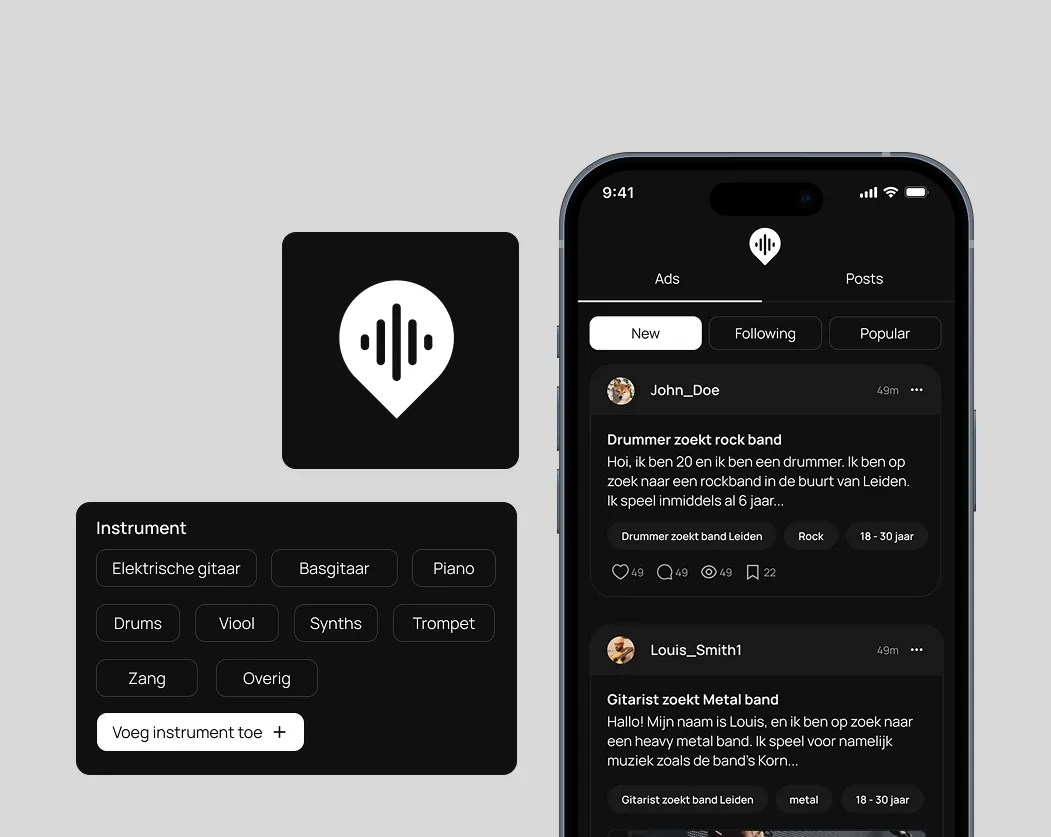
JamPoint is a concept platform for musicians to discover each other, connect, and collaborate more easily. This case study shows the design process from challenge and research to structure, wireframes and final interface directions.
Project Overview
JamPoint was designed as a social platform concept focused specifically on musicians. The goal was to create an experience where users can present their musical identity, discover relevant people more easily, and start collaboration in a more natural way than on generic social or networking platforms.
The Challenge
Many existing platforms are either too broad or not built around the actual needs of musicians. It can be difficult to find people with the right style, instruments, influences or availability. The challenge was to make that process more focused, social and intuitive.
The Approach
- Research and Discovery
- User flows and information architecture
- Design Process
- Wireframing
- Prototyping and Testing
Research & Discovery
The research phase focused on understanding what musicians need when searching for collaborators. Key themes included trust, musical compatibility, quick filtering by instrument or genre, and the need for a profile that says more than just basic personal information.
User Research
- Conducted a survey among 45 musicians to get quantitively insights in current situation.
- Conducted 12 user interviews across different demographics(students, bandmembers, professionals) for high quality insights.
- Identified current situation, irritations etc.
User Journey Map
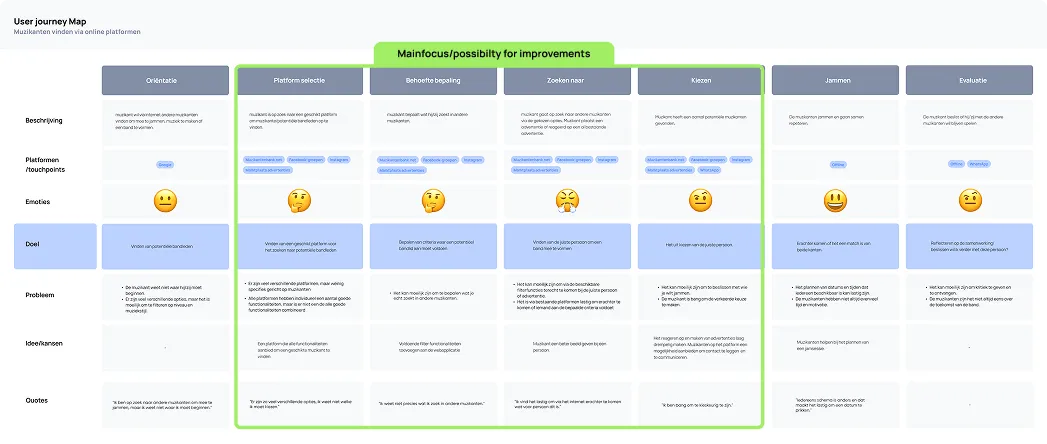
Mapping the user journey clarified where friction appears when a musician wants to discover someone new, compare profiles, and decide whether to connect. This helped identify the moments where the product should feel most helpful and clear.
User journey map
Competitive Analysis
A competitive review of existing platforms showed where they perform well and where they fall short for this specific audience. That analysis helped define opportunities for stronger filtering, better profile presentation and a clearer collaboration-first experience.
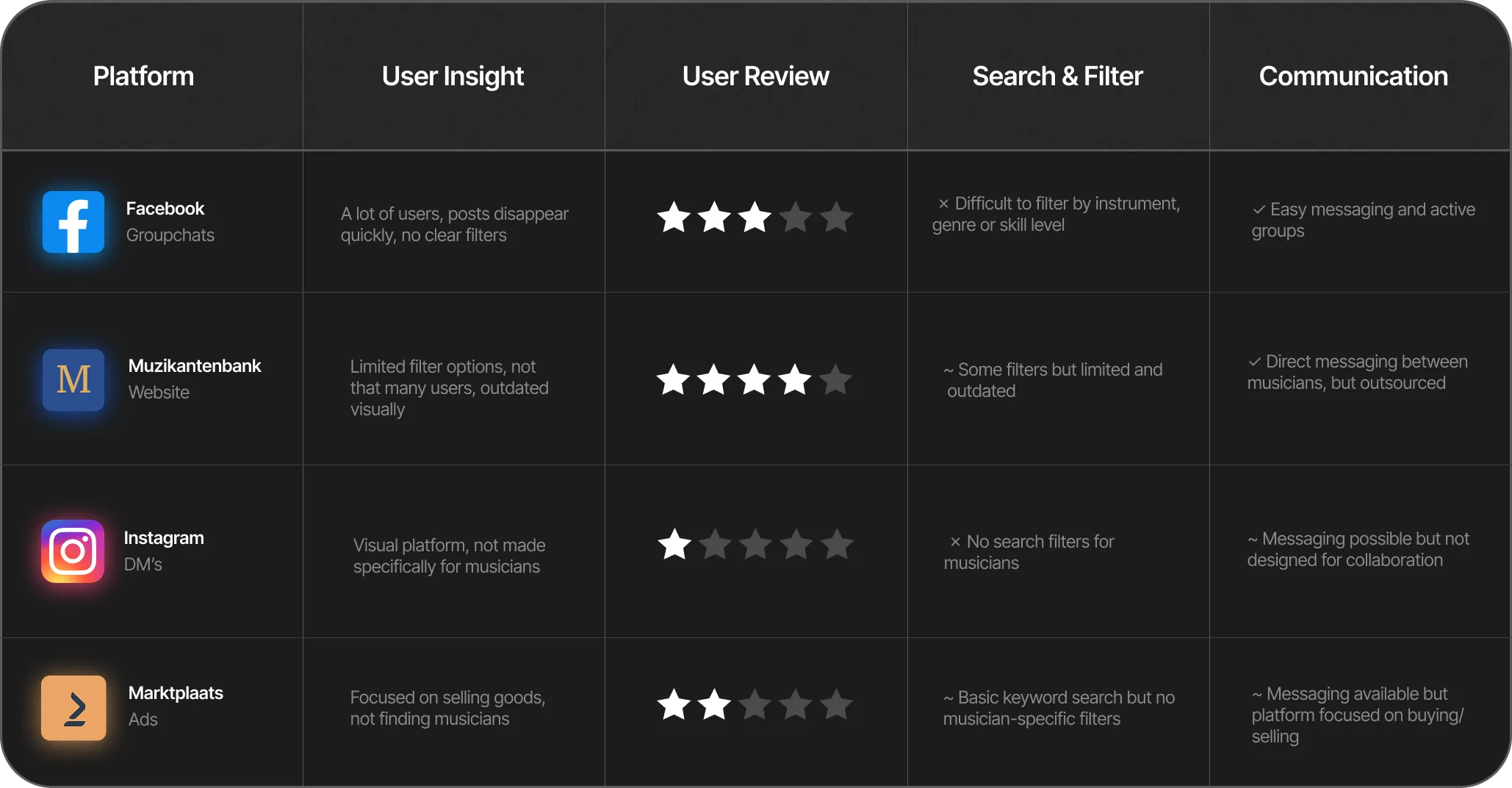
Competitive analysis
User insights
1. Trust & Confidence
Collaborating with someone from the internet can feel risky. Musicians need enough information about others to understand who they are, what they play, and whether they are a reliable collaborator.
2. Centralized Collaboration
Musicians often rely on multiple apps to find band members, communicate and share material. This fragmented process slows collaboration and creates unnecessary friction.
3. Finding the Right Match
Discovering suitable collaborators requires more than browsing profiles. Musicians need effective filtering to quickly find people that match their style, instrument and experience level.
Derived design actions
Design actions
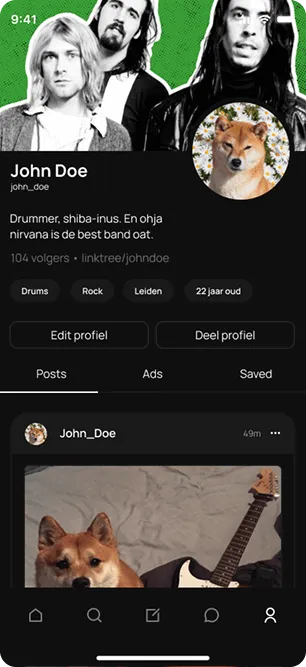
• Personalizable profile pages • Direct messaging between musicians • Uploading videos, photos and music
Design actions
• Central place to connect with musicians • Entire process handled within the platform • Ad insights and saved listings • User preferences such as dark mode / light mode
Design actions
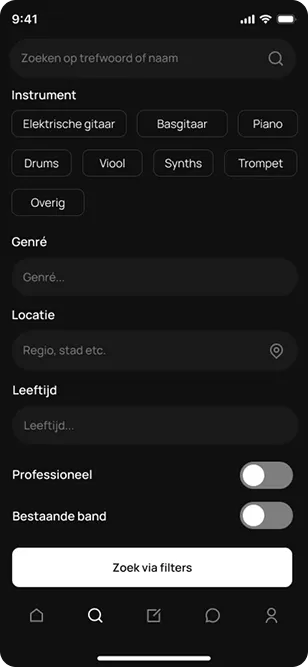
• Filters for genre, age, location and instrument • Professional or amateur indicators
Persona
Based on the research, a primary user persona was developed to represent the target audience. This persona helped guide design decisions and ensure that the platform's features and experience were aligned with the needs and goals of typical users.

Persona
Chosen Direction
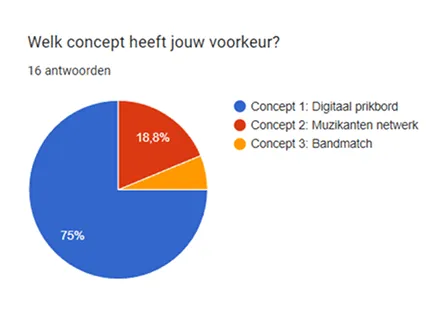
Through co-creation sessions and a survey, participants showed the strongest preference for the digital bulletin board concept. This direction was seen as the clearest and most practical starting point for helping musicians find each other.
System & Flows
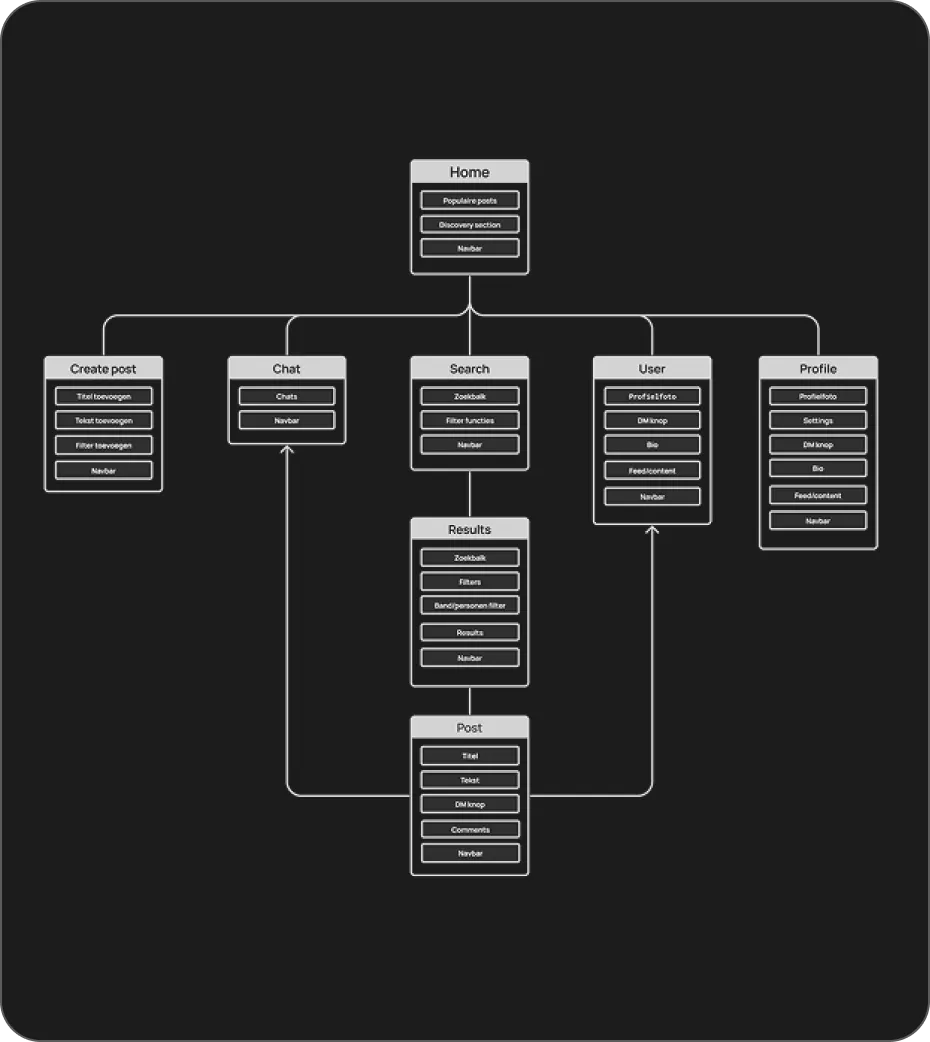
Before moving into interface design, I mapped the main content structure and user flows. This helped create a clearer overview of how discovery, profiles and interaction would connect throughout the product.

Sketches
Early sketches were created to quickly explore layout ideas and core features before moving into digital wireframes.
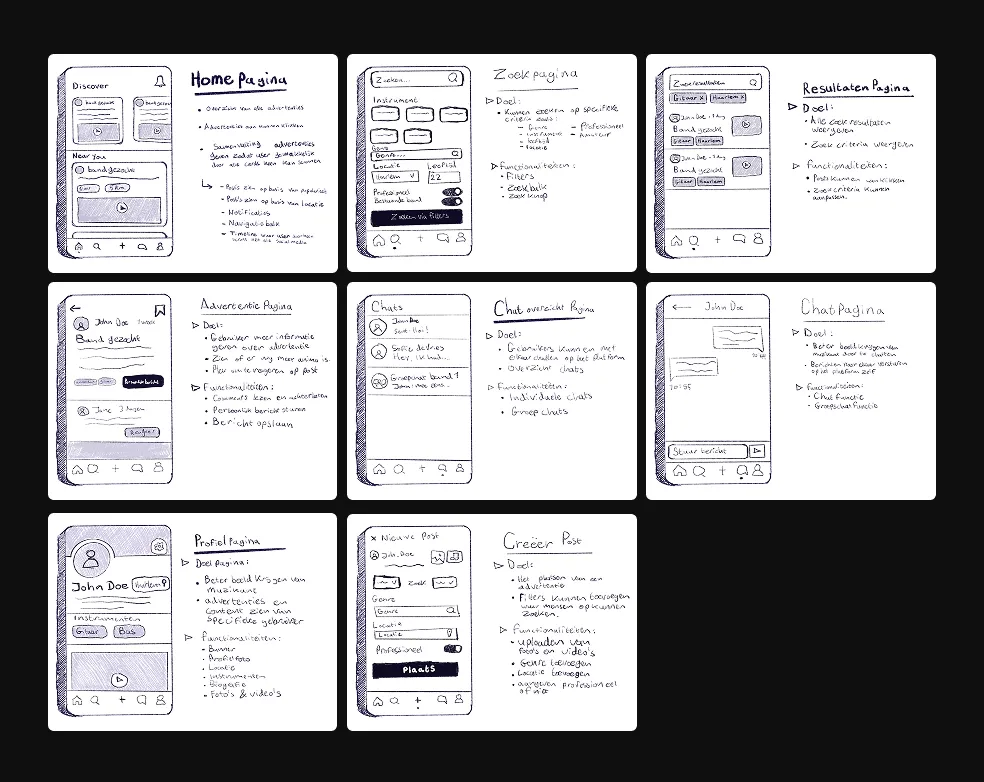
Sketches
Wireframes
The sketches were turned into a lofi prototype and tester with the users which led to a few key insights and improvements.
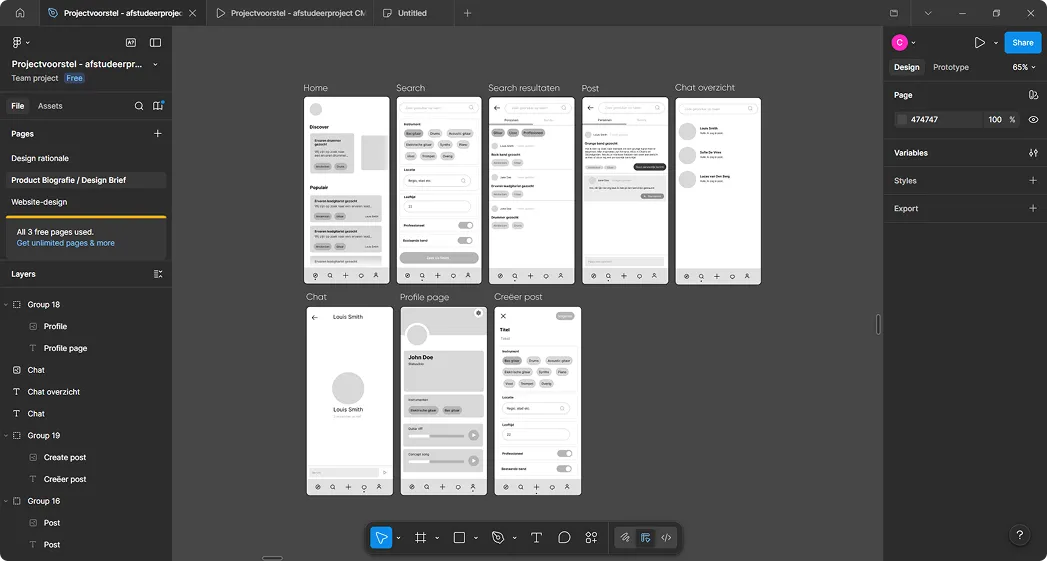
Low-fidelity wireframes
Usability Testing Insights
Two rounds of usability testing with the wireframes and low-fidelity prototype revealed several improvements to the platform’s structure and usability:
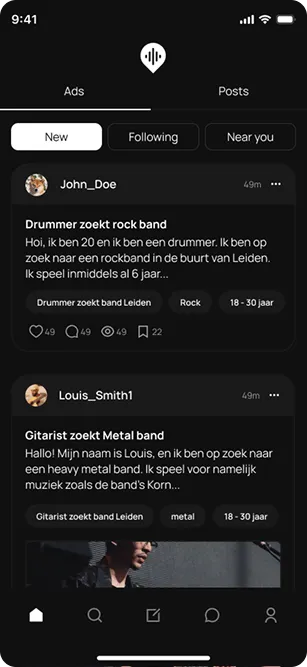
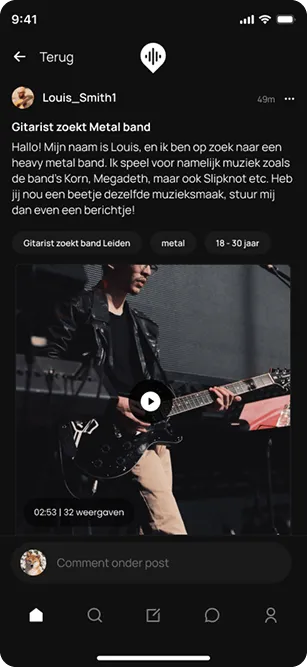
- Different post types – Users can create two types of posts: advertisements to find musicians and content posts to share updates. A timeline was introduced to organize these posts.
- Social interaction features – Users can follow other musicians, like content posts, and save posts to keep track of interesting people or opportunities.
- Homepage content filters – Users can filter the homepage to see new posts, posts from followed users, or posts from nearby musicians.
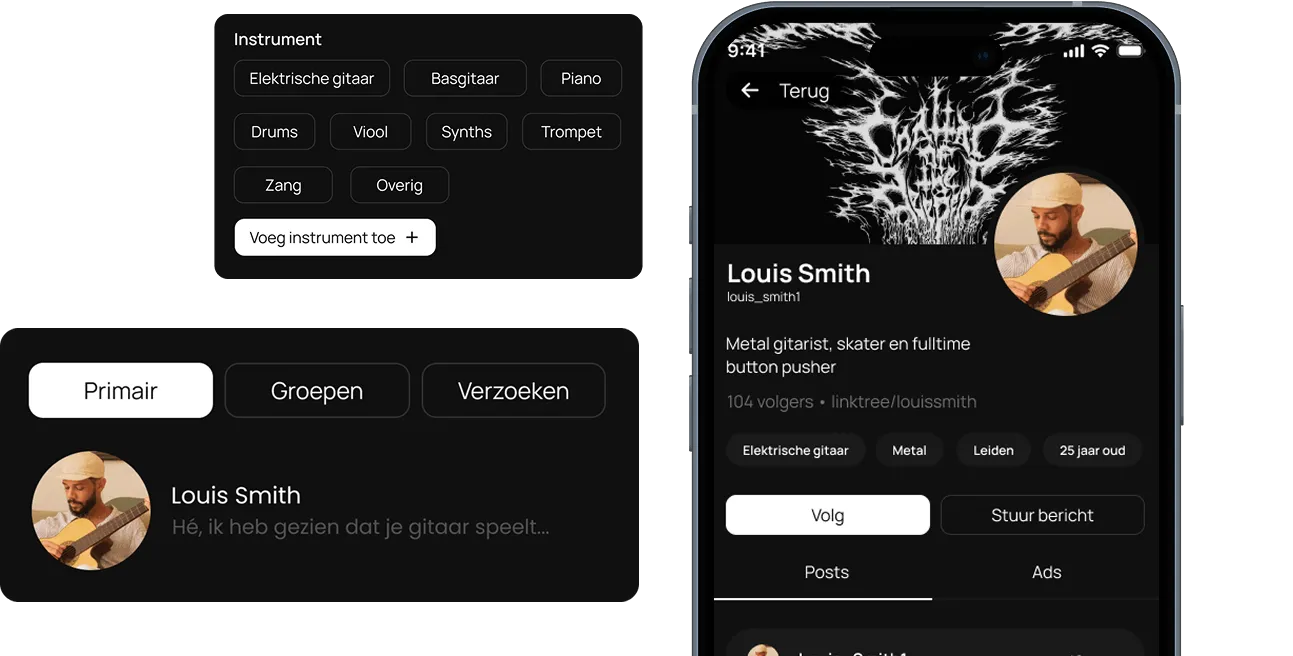
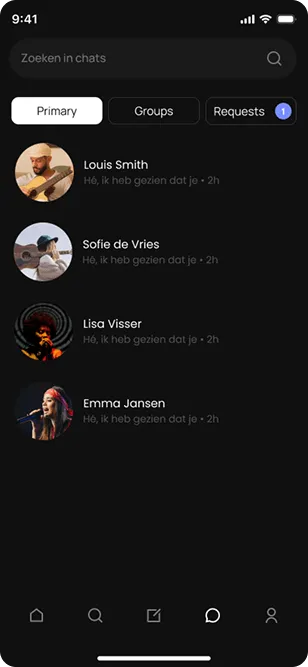
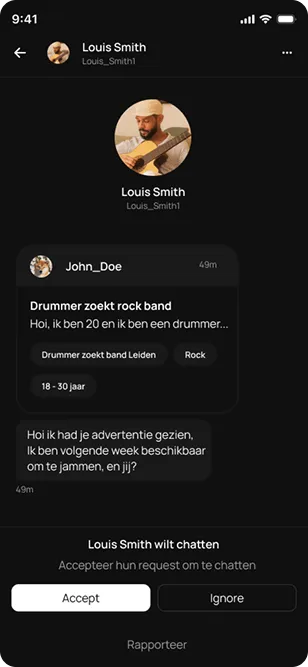
- Improved chat system – Filters allow users to switch between primary chats, groups, and requests, and replies are now linked to the original message for clarity.
- Message request control – Users can accept or ignore chat requests.
- Browse without an account – The platform can be explored without an account; users only need to sign up when they want to respond to advertisements.
HiFi Prototype
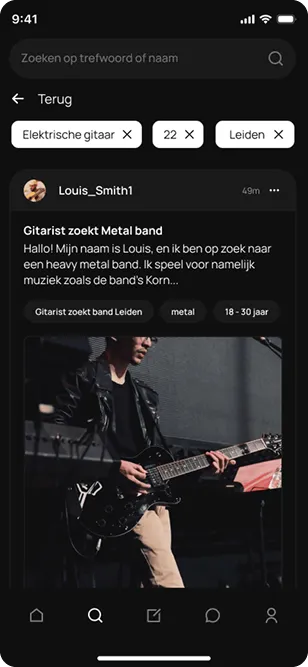
Based on the insights from the usability tests, a high-fidelity prototype was developed that incorporated the identified improvements. The design introduced clearer post types, improved search and filtering options, enhanced social interaction features, and a more structured chat system. These refinements helped create a more intuitive experience, making it easier for users to discover musicians, evaluate potential collaborators, and start conversations.
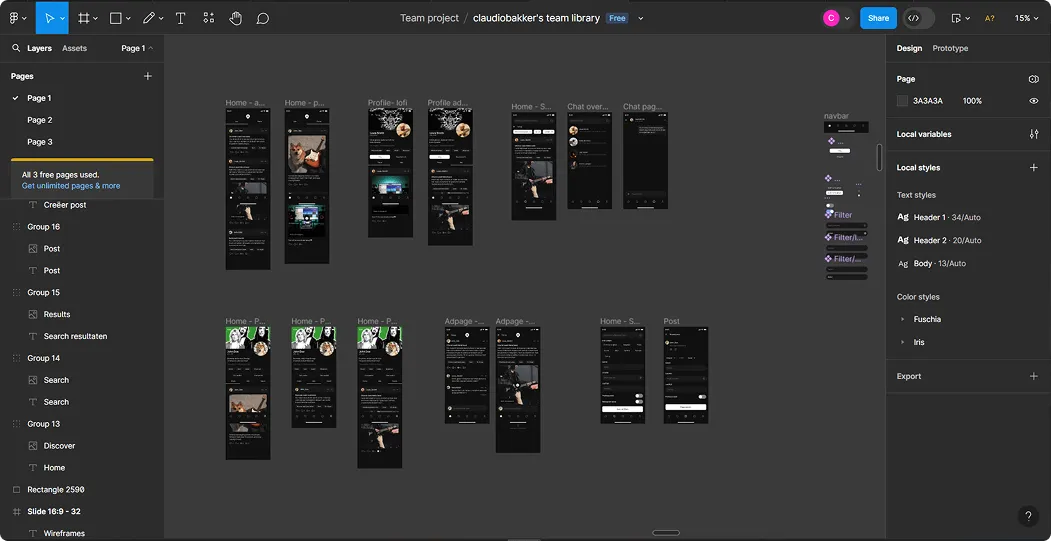
HiFi wireframes
Results
The final concept shows how a dedicated platform can simplify the process of finding and connecting with other musicians. By focusing on discovery, trust, and interaction, Jampoint helps lower the barrier to starting new musical collaborations.
 BACK TO HOME
